The Work That Software Can’t Do
In 1914, Ernest Shackleton placed an ad in a London newspaper:
Men wanted for a hazardous journey. Small wages, bitter cold, long hours of complete darkness. Safe return doubtful.
He had no trouble filling every position. What happened next has more to say about the future of accounting than most industry whitepapers.
Shackleton’s mission was to lead the first expedition across the Antarctic on foot. His ship, the Endurance, would carry the crew to the continent’s edge. From there, they’d walk across.
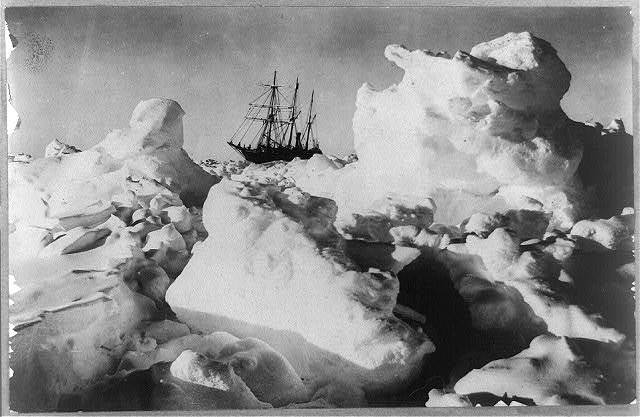
They never made it. On January 18, 1915, one day’s sail from the coast, pack ice closed around the ship and locked it in place. They could see land. They just couldn’t reach it.
Four years of planning, gone.
For ten months, they waited for the ice to break. It didn’t. Instead, it slowly crushed the ship. The crew gathered what they could — food, tents, three small lifeboats — and abandoned her.
Twenty-eight men now stood on a drifting ice sheet with no radio and no one in the world who knew where they were. They watched from the ice as the ship cracked and disappeared beneath them.
What followed was purely improvisation.
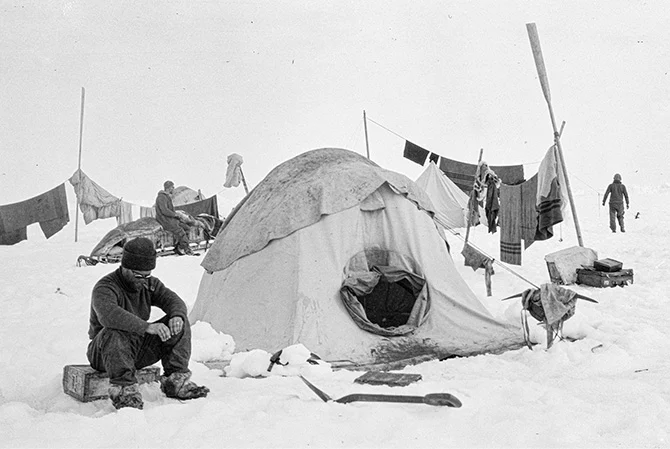
They camped on the ice and drifted with it for months, hoping it would carry them toward land. It didn’t. Rations ran low. And then Shackleton did something that mattered more than any of his navigation: he started assigning tent partners based on personality, pairing optimists with pessimists. He understood who was becoming too anxious and who could steady them. He noticed the person, not just the situation.
When the ice sheet finally broke into pieces too small to live on, they launched the three lifeboats they had salvaged. Seven days in open water, clothes frozen, hands cracked and bleeding, fresh water gone. They made it to a small island, a spit of rock in the middle of nowhere. No ship would ever pass. No one would think to look.
Shackleton then made a decision. He took one of the small boats and five men and sailed 800 miles across open ocean to South Georgia Island, where he knew there was a small port. The other 22 men stayed behind and waited.
Imagine watching your only hope sail toward the horizon and disappear.
Sixteen days later, half-dead, Shackleton reached the station. It took four more months and four failed attempts before he could get a rescue ship back through the ice.
Every single crew member survived.
Shackleton never walked across Antarctica. The original mission failed completely. But no one remembers it that way. What people remember is that when the ice made the plan impossible, he found a new mission: get everyone home alive.
The mission that actually matters
I think about this story often because of a pattern I see in our industry.
Many people entered accounting with a clear mission: master the technical craft, climb the ladder, become a Controller or CFO or Partner. The path was defined. The milestones were measurable.
Then the ice shifted. The routine work that used to fill most of the day — month-end close, reconciliations, data entry — is increasingly handled by software. If you keep optimizing for the old mission, you end up pusching against ice that isn’t going to move.
The real work of accounting was always attention. Not the kind job postings describe — catching errors and meeting deadlines — but something with more depth: actually reading a business, holding context across months, and asking the question the founder has been avoiding.
Shackleton kept 27 men functioning on a drifting ice sheet by paying close attention to them, tracking who was spiraling, who could steady them, who needed to be in which tent. He was reading signals that no one else was tracking.
That is what founders and business leaders need from their accountants and CFOs today.
What this looks like in practice
For bookkeepers, the shift means going beyond closing the books and noticing what the numbers are saying about the business. A spike in a cost category. A customer paying slower than usual. A pattern the founder is too busy to see. That five-minute conversation, grounded in what you noticed while doing the reconciliation, is often worth more to a founder than the hours of work that made it possible.
For tax preparers, the return opens a door. The preparation process surfaces things: a missed deduction category, a structure that is costing the founder money, a change coming next year that they have not planned for. Sharing that observation without waiting to be asked is what separates a commodity service from a trusted one.
At the CFO level, this is the whole job. Founders and CEOs are usually the last to see what is most dangerous to their business, because they are inside it every day. A good fractional CFO has enough distance to see it, enough context to name it clearly, and enough trust to say it out loud.
Across all of it, the question is the same: what did I notice today that no one else would have caught?
The tools change. The mission clarifies.
Shackleton could not control the ice. He controlled what he did when the original plan became impossible. He let go of the mission that circumstances had taken from him and found the one that mattered.
The tools in accounting are changing faster than at any point in my career. The work that software cannot do is the work that has always mattered most.
Pay attention. Notice things. Say something.
That is the work that brings everyone home.
Numera provides fractional CFO and accounting services for startups and growing businesses. If you’re thinking about what the right financial support looks like for your stage, we’d be glad to talk.