
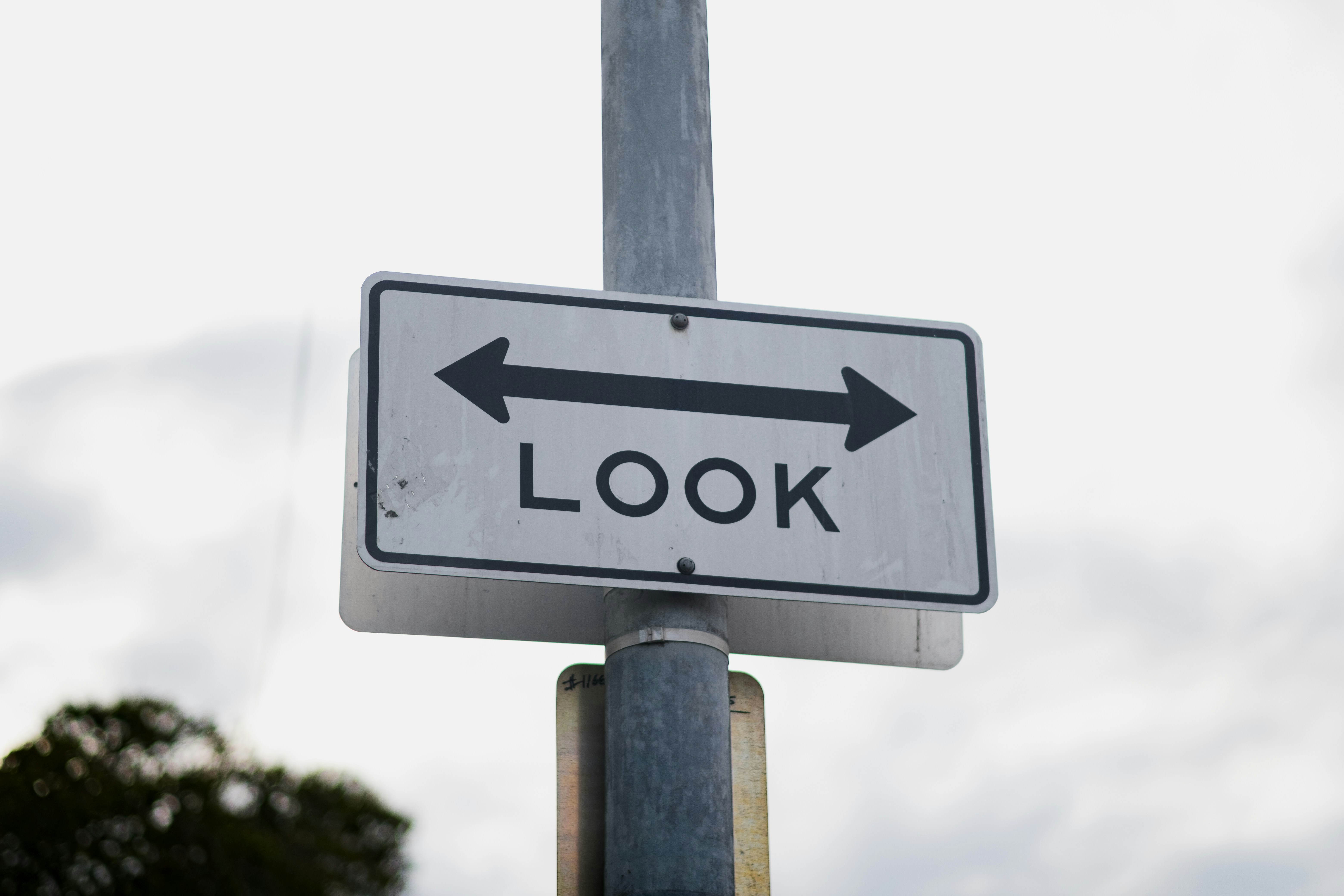
What you notice, notices you back
In February 1993, a firefighter named Derek Bart responded to a house fire in Los Angeles. It was cold, windy, the power had been knocked out and the family inside had been using candles. When he got in, he found an eight-year-old girl in a bathtub with her face and hands badly burned.
Her name was Myeshia.
Twelve years later, Derek was walking through a Walmart. He noticed a young woman working behind the counter. Her face and hands carried visible scars from burns. Her name tag said Myeshia.
It had been over a decade. He’d responded to thousands of calls. There was no reason to stop — except that something in him said, wait.
He walked up to her and told her about a fire in February of 1993. She started crying and so did he. They’d been strangers for twelve years, standing three feet apart in a Walmart, connected by a moment neither of them had forgotten.
Years later, Derek would say that the memory of finding her again carried him through the hardest stretches of his career. She couldn’t believe he’d remembered her name out of thousands of people he’d helped. Their conversation is now archived at the Library of Congress.
I keep thinking about what had to be true for that Walmart moment to happen.
Derek had to notice. Not just see — we all see. He had to register the scars, read the name tag, feel something click, and then do something about it. If he’d been in a hurry — if he’d been on his phone, or distracted, or just running through his checklist on autopilot — he would have walked right past her. And neither of them would have gotten back what that moment gave them.
The skill underneath the skills
We spend a lot of time talking about skills. Technical skills, soft skills, AI skills. But there’s a skill underneath all of them: the ability to notice.
When the goal becomes throughput, noticing becomes a luxury. You reconcile, you format, you send the deliverable. Check, check, check. The work gets done. But the seeing — the part where you actually look at what’s in front of you — gets squeezed out.
When you pay attention to why a client’s revenue dipped in Q3, you start building a mental model of their business that compounds over time. When you notice that a particular journal entry pattern shows up across similar startups, you’re developing pattern recognition that world class experts demonstrate – because you’re connecting it to context, to history, to the dozens of other businesses you’ve seen.
When you notice that a colleague on your team is struggling before they say anything, you’re building the kind of trust that makes teams root for each other. When you notice that a process keeps breaking in the same place during every monthly close, you’re seeing the system-level problem that nobody assigned you to fix – but that everyone will benefit from you solving.
Every time you notice something, your capacity to notice grows. Noticing is not a talent. It’s a habit. Like any habit, it strengthens with use and weakens without it. The more attention you invest, the more returns you get — in expertise, in judgment, in professional reputation.
And the opposite is true. Every time you scroll past something that doesn’t look right, every time you hit send without re-reading, every time you treat a deliverable as a checkbox instead of a piece of work that someone is going to rely on — you’re training yourself to see less. The muscle weakens. And one day, the thing you were supposed to catch walks right past you, and you don’t even feel it.
What this means in the age of AI
Automation is exceptionally good at seeing. Modern tools can flag anomalies, categorize thousands of transactions, and surface exceptions in seconds. They do things in minutes that used to take hours.
But they don’t notice. They don’t read between the lines of an email and realize a client is worried about something they haven’t said yet. They don’t pick up on the fact that a founder’s questions have shifted from growth metrics to cash runway — and what that shift means. They don’t walk through a Walmart and feel something click.
That’s your job. And it’s the job that becomes more valuable, not less, as machines handle the mechanical work.
Before you close your laptop today, ask yourself: what did I notice?
Derek Bart noticed a name tag. It gave him back a piece of himself.
Most days, the answer will be smaller than that. But the habit is the same. Small things are easy to scroll past.
Don’t scroll past.