
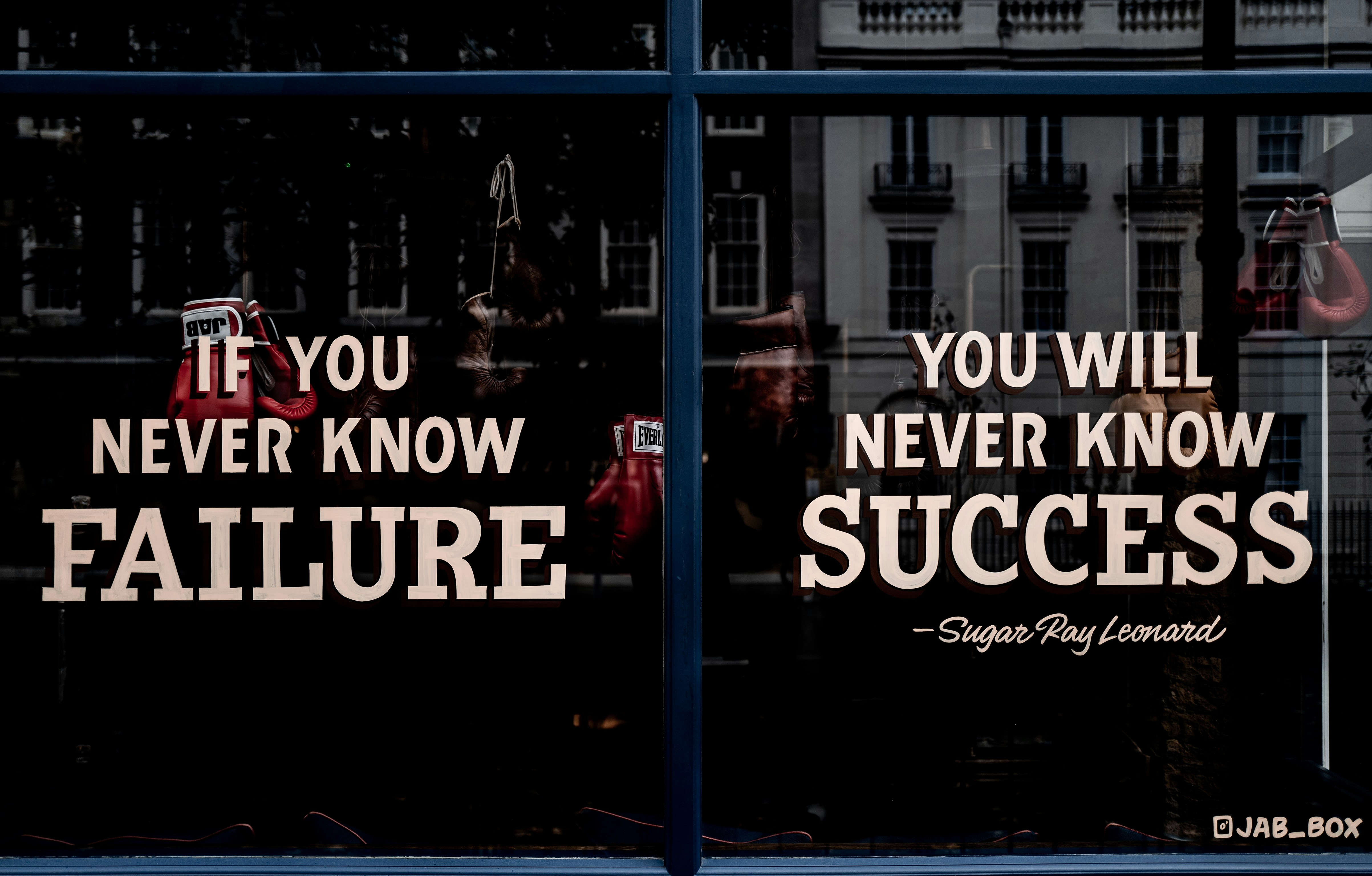
Hurricane Han: on failure, reinvention, and what success actually means
Young Han built his first million-dollar business at 18, failed five more, and spent two decades figuring out what he was actually good at.
Most founder stories are told as straight lines: idea, struggle, scale, exit. Young Han's is not that. He built a million-dollar business at 18, failed five times after, ran one of Steve Jobs's flagship Apple stores, scaled Phil's Coffee from 11 to 60 locations, and has co-founded twenty-four businesses across food, retail, technology, and healthcare. He now lives in a town of four thousand people, deliberately, and is building cash flow assets while he figures out the next chapter.
In conversation with Numera CEO Sandeep Shroff and SVP of Growth Venus Bakhtiari, Young walks through what he has actually learned across two decades of building, failing, and rebuilding — including a hire he made at Starbucks that reframes the binary between profit and purpose, and a definition of "rock bottom" that most founders never let themselves think about clearly.
What you'll take away
- Why Young's effectiveness drops at companies over 100 people, and why he stopped being ashamed of that
- The hire he made at Starbucks that reframes the profit-vs-purpose debate
- Why early-stage founders should be deliberately mediocre at everything
- The leadership principle that has stayed constant across all 24 of his businesses
- How to define your "rock bottom" before you decide whether to take a risk
Knowing what you're actually good at
Young's first business hit a million in revenue when he was eighteen. The next five failed. He went into debt. He tried to take W2 jobs in between, but every time the company crossed somewhere between 80 and 100 people, his effectiveness dropped. He kept noticing the same pattern: he thrived at zero to one and one to two, became less useful at two to three, and was a decent executive but a great builder.
The wisdom, in his telling, was not in figuring out what he was good at. It was in losing the shame of telling other people about it. He stopped trying to impress his parents. He stopped optimizing for what his peers thought a successful career should look like. He accepted that early-stage building was where he made the most value, and he leaned in. The five failures stayed with him, not as a wound, but as a kind of permanent gratitude for what he has built since.
Profit and purpose are not opposites
While managing a Starbucks in Mountain View, Young hired a man named Jeremy who has a developmental disability. He did not do it as a charity case. He did not take a subsidy. He reverse-engineered the unit economics, figured out exactly how busy the store needed to get to justify the hire on pure business mechanics, and then made the store that busy. The Castro Street location became one of the highest-volume Starbucks on the peninsula. Customers would drive past thirty or forty other stores to come to his.
Maria Shriver eventually reached out, not because Young was running it as a feel-good story, but because he was talking about it in unit economics. The same logic, Sandeep notes, sits underneath Numera: a workforce of qualified mothers working from home, structured around a business model that fits their schedules. Profit and purpose are usually framed as a tradeoff. Young's case is that if you do the math properly, they are usually the same answer.
"Our rock bottom is upper middle class. Given that privilege, it would be a shame not to try something more with it."Young Han
What founders get wrong, at every stage
Young breaks it into two answers. At zero to one, the most common error is trying to be great at everything. The job at that stage is to be the bottleneck remover, which means deliberately settling for mediocre across all functions and then iterating. Founders who try to perfect their marketing before the product works, or polish their ops before they have customers, are building cathedrals on sand.
At scale, the failure mode flips. The biggest mistake is losing simplicity. At Phil's, growing from 11 to 60 locations, the discipline that mattered most was picking three to five priorities per quarter that every single person in the company could name. Anyone on the team, asked at any moment what the major goals were, could tell you. Simple, Young argues, is what makes scale possible. Companies that try to do too many things as they grow do all of them half well.
Rock bottom as a privilege
The most striking moment in the conversation is Young's account of how he convinced his wife to leave San Francisco for a town of four thousand people and put their savings into building cash flow assets over five years. He sold her on it by walking through the worst case. If it failed, he would call a hundred people in his network, tell them he was back on the market, and most likely have a strong executive role within six weeks. Their rock bottom, he told her, was upper middle class.
The framing is unusually honest. Most founders avoid mapping the actual floor underneath them, which means they end up making risk decisions on vibes rather than math. Young's argument is the opposite: if you have a strong floor, you owe it to yourself to use it. Not because the jump is comfortable — he is explicit that it is scary — but because the privilege of having a high rock bottom is wasted if you don't.
About the speakers
Lightly edited for clarity.
Welcome to Off the Books, a Numera podcast. Today we have Young Han, who I like to call Hurricane Han. You will understand why shortly.
Young built his first million-dollar business at 18, failed five ventures after that, managed one of Apple's flagship stores under Steve Jobs, helped scale Phil's Coffee from 11 to 60 locations, and has founded or co-founded 24 businesses in total. What makes his story powerful is not just what he built, but how he redesigned his life around the pursuit of meaningful work. Welcome, Young.
Thank you so much for having me, Sandeep.
You managed one of Steve Jobs's flagship Apple stores. What did that teach you about excellence and leadership?
That was one of the most challenging jobs I have ever had. Steve was still alive when I was the store manager at the Palo Alto location and he would come in once a month. Apple retail back then was genuinely disruptive. There was no online ordering, so people would literally camp out for six or seven days to wait for products. We were responsible for keeping the line safe, feeding people sometimes, and then managing the rush when the doors opened.
You were also constantly meeting people who knew Steve, his former colleagues, board members, neighbors, and you never knew who was who. So you were always on. It was less like retail and more like war. At any given moment we had 120 people working in the location out of a team of 180 to 200. It taught me a lot about logistics, command, and leadership under pressure.
You built a million-dollar business at 18, then failed five more after that. What kept you going through that?
When I met my wife, she declined me six times before she agreed to date me. I would not be married with two kids today if I had not had the perseverance to keep trying. Five business failures felt similar.
I did try to get a W2 job in between. But every time a company grew past around 80 to 100 people, my effectiveness would decrease. I kept noticing the same pattern. I thrive in early stage, zero to one, one to two. Around two to three I become less effective. I am a decent executive, but I am a great builder.
Over time I stopped being ashamed of that and leaned into it. I also went into debt through those five failures. Business can go below zero, it is not a zero sum game. That experience has stayed with me and kept me genuinely grateful for what I have built since.
That is the wisdom part. Wisdom is not something that comes from outside. It is losing the shame of trying to impress other people and just doing what you are good at, shamelessly and repeatedly.
I stopped trying to impress my parents or my peers and just accepted this is what I am good at, and went all in.
You have called yourself a business person at Starbucks, not for Starbucks. What did that look like in practice?
Starbucks had extraordinarily sophisticated systems. They had figured out how to have 18-year-olds run multimillion-dollar business units. I wanted to learn that. But I also thought differently from everyone else there. Most people were either transient or thinking very linearly about a 10% raise or a promotion in five years. I was thinking about how to make more money faster and how far I could push what was possible inside this infrastructure.
So I kept testing things. One of those tests was hiring someone with a developmental disability.
Why would you do that given the productivity pressures at Starbucks?
Through volunteering I got involved with an organization called Hope Services and started looking at the data. There was a large population of people with developmental disabilities who wanted to work, but very few who were actually employed. Meanwhile businesses were paying taxes that funded social services for those same people. It seemed inefficient.
I did not want to do it as a charity or with a subsidy. I wanted to do it because the business genuinely needed that person. So I reverse-engineered the math, figured out how busy I needed to get the store to justify it financially, and turned the Mountain View Castro Street location into one of the highest volume stores on the peninsula. We hired Jeremy with no subsidy, purely on business mechanics.
The store actually got busier after Jeremy joined because people would drive past thirty or forty other Starbucks to come to ours. Maria Shriver reached out because of it. She was running a campaign called Talent Knows No Limits and liked that I was talking about it purely in terms of unit economics, not charity.
I had a similar experience. Numera is made up largely of mothers working from home. The thought was the same: there is a qualified, willing workforce. If we can make the work fit their schedule, you can do good for the business and for society at the same time. It took me ten years to have the courage to say that out loud.
We live in a world that is so binary about profit and purpose. But if you can make everybody win, and add a few more wins on top of that, the world is in a better place.
What do you think most founders get wrong?
Two answers, one for each stage. At zero to one, the most common mistake is trying to be great at everything. In early stage you need to be mediocre at everything and move on to the next problem. You are the ultimate bottleneck remover. Fight the urge to perfect your marketing, your sales, your operations. Make everything good enough across the board, then come back around and improve iteratively until you can hire people smarter than you.
At scale, the biggest mistake is losing simplicity. At Phil's we grew from 11 to 60 locations. One thing we did really well was picking three to five priorities per quarter that everyone in the company could point to. You could ask anyone on the team what the major goals were and they could tell you. Simple is scale. If you try to do too many things as you grow, you do everything half well.
Across all of those companies, what one leadership principle has stayed constant?
Transparency. Things will go wrong. That is not a question of if, it is when. It is not the good times that people measure you against. It is how you handle the bad times. How you share difficulty and bring people along communicates more about your leadership than anything you do when things are going well.
I would add personal vulnerability to that. Being open about when you have screwed up, when you do not know the answer, when you are afraid or depressed because of a failure. That gives people the confidence that their leader is a human being, and it models how to handle difficulty for everyone around you. Your biggest responsibility as a leader is to develop other leaders, and personal transparency is what makes that possible.
The best leaders I have had were the most vulnerable. Our mutual friend Jason, who introduced us, is like that. He always treated me with the same dignity and respect regardless of where I sat on the org chart. That is what a good leader looks like.
You once said to me: my rock bottom is so high. What did you mean by that?
My wife and I moved from San Francisco to small-town America, population 4,000, and put our savings into building cash flow assets over five years. The way I sold her on it was by walking through the worst case scenario. If we fail, I call a hundred people in my network, tell them I am back on the job market, and I most likely have a good executive role within six weeks. Our rock bottom is upper middle class.
Given that privilege, it would be a shame not to try something more with it. It sounds great when I say it like that. It is scary as hell. I am not going to pretend otherwise. But if you have a strong enough floor underneath you, you owe it to yourself to jump.
Rapid Fire
Gut instinct or spreadsheet?
Spreadsheet.
Hard skills or soft skills?
Soft skills.
First thing you do when a new business idea hits you?
Interview 100 people in that business.
Most expensive lesson you have ever learned?
Real estate. I should not touch it. I am a terrible real estate investor.
One business you would never do again?
Restaurant. Do you hate money? Do something else first.
Complete the sentence: success is...
Happiness.
One piece of advice for our audience?
Just try. I fail 90% of what I do every year and my mom still loves me. The only hard thing about failing is the ego. The people who matter will support you through it. So just go for it, because you never know what happens if you do.
Young's case is that the floor underneath you is what makes the jump possible. For most founders, that floor is built one quiet decision at a time — the systems you put in place, the numbers you actually understand, the people you trust to tell you when something is off. Numera exists to be part of that floor. If you're thinking about your next jump, we'd be glad to talk.
Talk to us